Middle Novel Writing Spread

I’m somewhere at the 95k mark in my current novel in progress. I’d assessed it at 130k-150k for the first draft, and I still think that’s a good target number. (Of course, given how I’ve been glaring at previously written chunks, inane dialog, scenes that go nowhere, and broken stuff I need to go back and fix, I’m hoping I end up with 90k of solid second draft.)

What is interesting is that this novel, which I’d started on a tear with 5k and even a 7k writing day, now struggles to get to 2k. And that doesn’t bother me as much as the fact that the plot hasn’t progressed anywhere nearly as far or fast as I’d expected. My experience is that this is normal: there’s more to remember about characters, more to fact-check against what’s already happened and, when dealing with “real world” fiction (instead of SF/FF) ensuring that real history matches what characters know, remember, and experience. Of course, given that this is a post-apocalyptic hero quest, there’s a boatload of science that needs to work out correctly: everything from heavy metal contaminant levels in volcanic ash to which grasses would be growing in a colder, wetter Permian Basin to me hitting up oil field workers and equine rehabilitators for their expertise in various archana I’d not be able to suss out on my own. (The internet, oddly enough, seems to have a wealth of incorrect, outdated, and ludicrous information on just about every topic imaginable; who woulda thunk???)

I’ve mentioned before that I’m trying out Scrivener for this novel, a departure from my usual and long-trusted package of MS Word/Excel and a tab or five of web links in my browser. It’s forcing me to look at everything from a scene/chapter point of view, and a lot of the handy things (like, for example, editing shortcuts such as switch case and autocomplete) are different, and more cumbersome, in Scrivener than in Word. One shouldn’t have to need a tutorial to use a package like this. Ugh.

My main cause for my slowing down is, however, my outlining skills. I’ve got a 100- and 5000-word synopsis of the novel, so I know what goes on. How the characters get to these waypoints is the issue. When I outline (or even sketch out) several scenes or chapters ahead, I can roll along merrily. And then I get to the end of that piece, and I find that all the minutiae of the writing in getting through the outlined areas has brought me to where I dont want to continue from there. A character has had an epiphany, a place I’d imagined in my outline as abandoned isn’t, or vice versa. The weather. The horses. My main characters’ moods. So then there’s a period of Great Restructuring so I can get things lined up before I can continue outlining.

Sure, I could just slip a note in at the end and then continue writing as if the Great Restructuring had already happened. But there are dialog and scene changes that would be written, and by the time I’d get around, after the first draft is finished, to revisit them, I’d have a lot of remembering to do, with multiple discontinuities to be addressed. I’m shuddering just thinking about it.

The alternative, I’m told by smug parts of my apparently-not-sub-enough parts of my consciousness, would be just to outline everything and stick to the plan. For so many reasons I rebel against this. I tried writing a novel based on this idea and I had to put it down after about five thousand words of writing (not including the outline, summaries, etc.). Maybe one day I’ll pick it up again and try it without using the dang outline as a poured-concrete kind of framework.

With fully outlining a piece before starting comes the ability to do all the necessary research for the novel. All the science and pack train questions I’m asking or looking up could be done in one fell swoop instead of being salted into my writing time. (Of course, then what productive thing would I do when pausing in the writing?)

I’ll be all right this time, because the story is tied to a very specific geographic trek, one that I can map out using Google Earth in advance, and then I can tie events to literal markers on the map. That’s meant that I can turn around and tie days of the trek to chapters in the novel, even if I may move the delineators around after I’m done with the draft for plot development reasons.

Bottom line: I think there’s a lot more thrashing and extra writing time when not working with a fully-developed outline. And its faster from a research perspective as well. But “pantsing” the story gives my characters the freedom to develop and make the novel theirs, instead of being a careful construct of an author.

As always, YMMV on this.

On Characters with PTSD

One should write what one knows, goes the hoary advice. And it’s true: stories are vibrant, clear, more memorable and more interesting when the writer really knows their subject matter, whether it’s a location, a type of character, or an event.

One of the characters in my current novel in progress has fairly severe PTSD. Enough to function (mostly) in society, but not in great shape. He as flashbacks, hypervigilance, almost paranoid worries… and is living in a post-apocalyptic world where being paranoid was a useful trait. Read More about On Characters with PTSD

Alt-reality

Charlie Hebdo, Synagogue shootings, Orwell 1984, Orwellian Doublespeak, vaccines, war on terror, war on cancerI’ve got a word — augre — to describe augmented reality (as opposed to VR or virtual reality). Currently social media and news call it “AR,” which is, I think, a geeksnob way of obfuscating things.
The neo-nazis and other fascists infesting America took a page from Orwell’s 1984, redefining their brand of hate as some kind of political alternative to the spectrum of what was, until this point in American political history, bounded by parties respecting the idea of democracy — or, at least, a republic.

It’s clear that the idea of “alt-” is the new Orwellian doublespeak. Alt-right. Alternative facts. This, friends, is doubleplusungood development. And while it’s thrilling in a “we’re going down the maw of the kraken” kind of way, it’s a danger sign about our society, and the validity of language as a means to describe the reality around us.

On Writing Christ Origin Myth Analogs

Courtesy Wikia

Courtesy Wikia

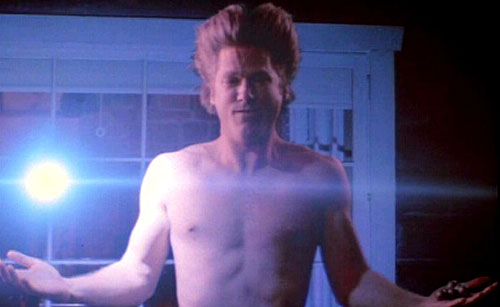
C.S. Lewis’ Narnia books, “StarMan” (starring Beau Bridges), and the Matrix trilogy all mimic, purposely or accidentally, the origin myth of Christianity. Echoes of the various aspects of the Roman, Celtic, Nordic, and many other cultures have been blurred into the practices of modern Christianity. And some of these have become universal, such as the idea of transubstantiation: the idea that wine and wafer turn into blood and body. That this is a ritual act of cannibalism is amusing from this Jewish Atheist’s point of view.

And irrelevant, or so I thought, until, as I was going over feedback notes on a short story Blood of Leeches, before submitting it for publication. An author reviewer wrote (and I’m paraphrasing here) “…so you mean his blood makes people into followers?” As if this was an alien, weird, idea. Now, I’m not equating my little piece with the works listed at the top. But… it’s funny how people incorporate (sorry) the rites of their religion as normal parts of their lives, but see them as alien when expressed in someone else’s world view.

Purported, Alleged… Fact

Richmond.com reported on the wind-up of a white supremacist robbery trial. The last of the defendants, who was an informant for the FBI, received a seven-year prison sentence. the headline was a bit odd:

Last defendant in alleged white supremacist robbery conspiracy sentenced to 7 years

It’s good that newspapers account for not laying blame until the courts have ruled. What’s odd here is that while the crime might have been alleged before the trial started, now that the last defendant has been found guilty it’s safe to step down from the ‘alleged’ and just call it the robbery conspiracy that it was.

I might be, in these racially sensitive times, to analyze descriptions of crimes and their states vis-a-vis the races of the defendants and victims. But for my day job would have gone I…

Ableist, Racist, Elitist, Classist

That’s what I was called a few days back when I commented on changing “your” to “you’re” in a tweet someone made regarding homophobia. Yeah, I didn’t need to do that. And yes, it did not substantively change the message of the text.

That said, the deprecations made by the Facebook poster were for my temerity in correcting someone’s English.

Words have power. Without the right words, the power of expression is perverted, diluted, or rendered nonsense. It is none of the above to correct someone who otherwise seems to be able to create clear sentences.

A well regulated Militia, being necessary to the security of a free State, the right of the people to keep and bear Arms, shall not be infringed.

That pesky comma, misplaced, misunderstood, possibly an artifact of the many variations on the text written and edited by congress, copied imperfectly for ratification by states, recopied by scribes such as Adam Lambert, is causing Americans palpable, immediate grief.

Former Supreme Court Justice John Paul Stevens suggested that the addition of five words would resolve the conundrum of ill-phrased English: “A well regulated Militia, being necessary to the security of a free State, the right of the people to keep and bear Arms when serving in the Militia shall not be infringed.”

So yes, words, and punctuation, have meaning and power. And no horde of “Social Justice Warriors” can reduce the important of correct language in support of clear communication.

On Putting My Babies to Sleep

I started writing pieces on in the Thippah’n universe since 2005. First a science fiction NaNoWriMo novel. Then a few really neat long scenes — expandable into shorts. Then another novel and another and another which needed shredding after I published the first online.

I’ve been sitting on editing the second novel for years. Light passes. Blocking and language passes. Rearranging for plot and twists. This last one is a back-to-front, word-by-word edit. And I want to stop.

Writing is about being ruthless. It’s about ripping out what’s not working. For non-writers, it’s like finding a knit where there should be a purl and yanking out six inches of knitting to make it right.

What I’m thinking of doing is like unraveling five sweaters because one doesn’t like the design. After they’re already up on hangars. But they’ve become my albatross, leaching energy from other projects I’d like to do. But it’s such a great universe! But its far more inchoate than almost every other project I’ve got on the drawing boards, in my drawers, under the table, and stuffed into cracks on my shelves.

So is stopping and not scheduling work on them cryosleep? Or euthanasia? I won’t be the same author if I return to them in a few years. Would that be better for them?

A post with many questions and no answers that I can see. Suggestions, however, are always entertained.

Stale Writing and Technology

The novel I mostly wrote back in 1985 can’t be finished now. Technological advances and political events have overtaken major story points so unless I want it to be an alternate universe fiction, it’s dead.

And that’s a good thing, I think. Writing the ten-year novel should be about the things that are unchanging: the nature of people, of personal growth. Wanna write science fiction? Write it and get it out there: dawdle and the po’on (POH-ohn, a Hebrew word literally meaning “‘here’ device”) is leapfrogged by the smartphone. And the Israeli-Palestinian stupidity has surpassed even the blackest of my noir fantasies. At least I got Syria and Jordan right.

I’ve been re-reading a slew of science fiction novels (latest: the Barrayan Saga books), and, as Lois McMaster Bujold has stated that most of the novels were written to stand alone, it’s been eye-opening to see how she avoids infodump in pursuit of establishing character and milieu when readers attempt to peruse them in order. Learn from all that’s been written, not just the latest.

Yearly Writing Prompt

CaptureSeeing Google congratulate me on my (purported) birthday gave me quite the startle. Not that I have a birthday: that I forgot that Google Knows All (even if the date it chose wasn’t quite right due to my obfuscation). However, it brings up a thought on writing: prompts. There are prompt generators [1][2][3] to help, but I’ve got two dates that I’ve used, more or less regularly, as starters for poems. Yom Kippur (the Jewish holiday commemorating the ‘sealing of the judgement’ of a person for the coming year), and my birthday.

The former invites reflective meditation. Frequently the subject is personal, based on my experiences that year. The latter is a poem, with the number of syllables equal to my age that year, and functions as a sort of momento mori for my life to that point. I’ve some really good ones and many that stretch and strain to syllable count instead of content.

But there they are: days for reflection based on a habit of {shudder} decades at this point.

Have you prompts? Please share!

Trainventure: Yet More Character Sketches

These were taken on the train ride from Chicago to Seattle.

Amish

Lots of Amish women and children wandering up and down the train on the way to Seattle. Didn’t see any going up to Chicago. Saw a few couples all sitting together in a coach car: stereotypical beards, shleykes (suspenders) on the men, white hats reminiscent of lampshades, crisp and pleated, on the older womens’ heads. Kids wearing what looks like it might be homemade clothing; if it is, there’s a business model somewhere that should be looked into.

Two men in their bowl haircuts and vests came in with a little boy in his little vest. He’s been coughing all over the place at his seat in the lounge. Hope it’s not the Black Plague.

Medieval Fatigues

Wild, wiry gray hair, a blouse-like shirt, slightly wild eyes. Wandered down the lounge car.

Nerds On A Train

Sat down with dinner with a 24-year old pre-med school, post-baccalaureate student, a nurse supervisor, and a retiree who ran a print shop. Within five minutes the former two and I were involved in a discussion about EMR software, which turned into a discussion about MUMPS and then IPT-10 code humor. W.TF.

The Stop Singer

John was the conductor working without a net – an assistant. Short, rotund, balding white hair with a short-trimmed beard. We started chatting in an open area in the crew/passenger sleeper downstairs, while I stretched in the open space. Like most Amtrak folk he was very passionate about what he did: a priest of the worship of the iron horse. He spoke with a moderate stutter. Nothing big, but certainly a sentence stopper when he got to certain words. Except when he got on the PA system to tell people about upcoming stops. Then his voice turned mellifluous and warm, smooth as cool honey pouring from ceramic ewer onto plush, steaming pancakes. No trace of a stutter in that well-modulated, cordial, ‘I own this train’ patter. Didn’t collect model trains. How odd…

Queen of the Lounge Car

Most of the Amtrak folks are, at least, perfunctorily polite. The woman running the bar downstairs in the lounge did her best to provide a comparative exception. Grimly professional, rising not to politeness nor small humor (okay, my humor can be very small, I agree). I asked about Advil™ and she looked at me as if I’d asked about buying meth: “Sir, we don’t sell any medications on this train.” Okay then.

Later… Was eating breakfast with two passengers: one a young man studying criminal justice, and another guy. The subject of the lounge car came up.

“What a bitch,” one said. The other nodded.

“I mean, I’ve been a waiter, and she’s just rude as hell.”

Quote from her on the PA system: “And please remember: shoes, shirt, and courtesy must be worn at all times in the lounge car.”

The Trump of the Train

The Seattle-bound train is built interestingly, to best suit the majority of passengers, and not the sleeper folks:

From my berth in the crew/sleeper car, the dining car is the closest car with tables on which I can spread out. I found an empty table and started spreading out. “What are you doing?” came the sharp question. The conductor.

“I can’t work here?”

“No,” she said, with a distinct Dakotan twang. “This is my office. I sit here.”

“Okay, I figured this was less of a deal than the tables in the sleeper car.”

“What tables?”

“The ones downstairs in my sleeper car. With the open space?”

“Well, that’s my office too. You can’t sit there.”

I forebore from asking if her last name was Trump. But only barely. I packed up as she primly spread a white towel on the seat I just vacated and carefully plonked herself down in front of the magazine or crossword puzzle – I didn’t stick around to see which was her next office chore.