Critiquing and Paper Cuts

I’m lucky to live in a city where there are overlapping supporting circles of writers in every possible genre. I’m involved in a few writing groups, including an invite-only one, the venerable and awesome Slug Tribe (that just got a great write-up in the Austin Chronicle), as well as occasionally hitting a Meet-Up group every now and again. Plus the Writers’ League of Texas is based here, with its annual Editors and Agents conference and the cozier, and perhaps more “incestuous” ArmadilloCon (and I mean that in the least creepiest way!). And the Austin NaNoWriMo group, a once and future way to spend November.

Three of the above perform critiques on pieces. The most paper-prolific by far—and I say this with two bandaged fingers—is Slug Tribe. Probably best to bring at least fifteen copies of a piece. With a 5,000 upper limit, that’s approximately twenty sides of writing (more if there’s a lot of dialog). On average sixty percent of Sluggers write comments on the pieces, which I dutifully reel back and bring to my editing operating theater. If you’re keeping score at home, that’s 300-400 pages single-sided. Which I try never to do, what with the lack of available earthworms at my place.

So here’s the evening’s tidbit: collate them by page, putting them in reverse page order (so you’re working from the back of the piece forwards). Take the “global” written comments (thank you, thank you all for the thought put into them!) and put them at the back of the pack. Why?

  1. People tend to comment less towards the end of the piece. On-the-spot editing is tiring, and once a reader has made their point, why flog the expired equine?
  2. Going backwards makes it harder to skip something because the mind forms the logical construct of the paragraph, and not the backwards verbs of the placement.
  3. Those pesky page numbers mean very little when going through the tenth set of edits. What was on page one, with an easily spotted paragraph shape is no longer there. That means wasting brain and time trying to find something that there. Going backwards en masse means never having to figure out where you were before you carved up two paragraphs and inserted four clauses.
  4. It’s hard to know who commented on a page, until you get the the end (first pages). This means addressing each suggested edit on its own merit, and not on the merit of the author making the comment. Just because they’re a great writer doesn’t mean their edits have a greater weight than a sharp-eyed newcomer.

Enjoy a slightly less painful time editing your next critiqued work!

On Research, and the Need for Brain Bleach

I’m careful, when doing story research, not to trip up and set DHS, the USSS, or EIEIO on my tail. I recently moved to a private VPN connection because my damn Internet provider isn’t paying me enough to get access to my search history (neither is Google, but I’ve got other ways around that).

I also try not to click on sites that get me, um… to places I hadn’t intended on visiting. So I was surprised, when working on a bit of research on rosaries for a short story (novella? novel?) in my Upline universe. I was trying to see if there were any specific numbers of beads in a rosary. Interesting stuff, for an atheist Jew. What I didn’t expect is exhibit(ionist) A, to the left. Seriously, this site was selling rosaries. Lots of detail about the beads, and prayers, and everything. And then I kept looking (masochism knows no bounds) and found the incredibly apt ad for a rosary belt!

There’s oh so much I don’t understand about the Mysteries of some religions…

“Last Run” Topped Out

By Leif Ørnelund – Oslo Museum: image no. OB.Ø59/2680 (Byhistorisk samling), via oslobilder.no., CC BY-SA 3.0, https://commons.wikimedia.org/w/index.php?curid=23247983

When a building’s top floor is in place, especially for tall buiildings, they’re “topped out.” Usually a tree, sometimes a flag.

Authors should have something analogous for a novel. Even if we’re not trying to appease the tree gods.

Sunday I pitched two projects to an agent at the Writers League of Texas Agents & Editors conference. A win for me, at my first pitching, would be “sure, I’d like to see the first ten pages and a query letter via email.” The agent with whom I chatted wanted to hear about two of my projects: my current novel, Last Run, a post-apocalyptic tale, and my Induction series, a “hot” SF set of novels. She wanted the first three chapters and a synopsis of the first, and then maybe the second. Yoiks.

Yesterday I “topped out” the novel, tearing up at the last scene. Last Run currently stands at around 173k words, and the sweet spot for novels in that category is closer to 85k words.

So… behold the mighty editor’s pen, out and primed in red.


Bravery

I have a character in the short story ShutEye who gives her life for a love she knows she can never have, because it’s the right thing for the greater good. There’s a character in Best Shot (being shopped) who will do anything to get the right photo.

These characters are trivial, flickering shadows in comparison with the real ones. On this Memorial Day weekend there are the obvious ones who fought and died, some knowing their actions would certainly kill them, to save others. The young and the idealistic are great for cannon fodder (said the cynical ex-soldier) because we believed in the true rightness of our cause. The brave are a category apart from that: they are willing to sacrifice themselves to save or help others. For examples, look no further than the American Congressional Medal of Honor stories. Every war has their heroes, from Afghanistan & Iraq to the Vietnam War, back through the Korean conflict and of course World Wars One and Two. And every country has its fallen who died bravely for their military cause.

Yes, one can argue whether the war was justified, or served its purpose in the most horrible of methods. But this is about personal bravery, not the religion- and drug-fuels acts of cowards and terror-mongers. The same Medal of Honor rolls tell the stories of bravery during what they call the “Indian Wars,” which today the world (excepting the current US administration) would call “genocide.” These men were, however, brave in their actions, if not the moral righteousness that history best describes.

Bravery is without border, without nationhood. It’s a person deciding to do the right thing as they see it.

This weekend we have two more recently fallen, and another seriously wounded, protecting their country from enemies domestic. Without uniforms, without preparation, without patriotic pep talks or camaraderie. Bravery comes from within, and the ‘spur of the moment’ comes in part from purity of thought. Neither were there under orders, of with a unit. Their bravery was as true and real as any from the Congressional rolls of recent decades.

Friday night a domestic terrorist apparently tried to attack two women in hijabs on a commuter train in Portland.

If Congress can honor a Arnold Palmer, a golfer, with the Congressional Gold Medal, it certainly, at a very minimum, honor these three men for their service to this country, fighting against terror.


When Story Meets Truth

I have a short story, Best Shot, which I’m currently shopping for publication. It started as a snippet: I photographer killed

Picture of photographer's video camera on his chest, shot by  a sniper.

From the Daily Mail

while reporting from a combat area. But the incident with the Iraqi videographer this week was very spookily like the story. At least, in real life, no harm was done.

Character infodump

My current WIP has a cast of characters, a bunch of whom are all first seen by my POV character in a room together. My first draft of this was, upon re-reading, a flood of details that made the narrative not only drag, but flounder.

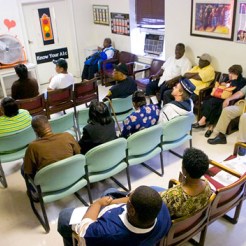
imagine you’re walking into a waiting room. You look down and see a tortoise. Sorry, attack of literary drift. Seriously: what do you notice when you look around? I went through this exercise going into a radiology office recently. For my PTSDness I first spotted exits, including windows. Then there was the arrangement of the chairs. Then people, starting with only the basic observations: hair color, bags, canes, or other visually interesting bits. Shoes, the floor. Then back to the people, actually noting the ones who caught my eye, or the tableaus in progress (two people helping an older relative sit down from standing at a walker, a young girl, maybe eight or nine, looking scared next to her dad, with short-cropped hair). Then actually checking people out. A woman wearing a 60’s-style, felted, dark blue coat with big buttons in two rows—and apparently nothing but leggings below. The mom with a toddler and a baby in a stroller, valiantly trying to keep them from hitting their boredom wall.

If I described all that it’d be interesting for that one paragraph. But characters deserve attention, to fix them in a reader’s mind. I resolve that (in the book) by interleaving my character’s action. In the above example, he’d walk across to the clerk’s desk and do business while idly puzzling about the woman in the coat. Then turn around, walk past the walker and people, maybe catch a snippet of conversation triggering a background thought. Then try and dodge the mom and her kids, and end up next to the close-shaved girl. Each stop gives the opportunity to really look, and describe, the character. It also is a way for you to go deeper with the POV person: how they react, what memories are triggered, comparisons with other people in the character’s past.

Today’s takeaway: describe characters the way your POV would, starting with details interesting to her or him, and use action to break up the internal monolog.

Writing and Fancy Keyboards

I splurged yesterday and got myself a gaming keyboard. Not that I game, mind you, but I miss the clickety-clack of keys, and the Microsoft Ergonomic keyboard that I use at home is a pain in the tush to lug around to coffee shops all the time. So I went a bit wild, and ended up with something that’s smaller, clickety, and has glowing keys in every color and pattern.

Why someone would want to have a keyboard that swirls in every color of the rainbow is beyond me. Or flashes, strobe-like. But, used wisely, the keyboard color scheme can be helpful. Between disabling unused keys and creating a few nifty shortcuts I’ve made my Scrivener‘s experiment a bit more livable (still not too happy with a lot of it’s kludgy design), but that’s for another post.

AIPF Publication

One of my haikus, “Neutered,” was selected for publication in the 2017 Di-AIPF verse-city anthology. It’s a sweet little thing, and hopefully you’ll see it in the Anthology if you’re an Austin poet. It’ll be part of a larger Austin poems chapbook I’ll be putting together by the end of 2017.

And… back early in town

My field research trip for my current novel made it as far as Big Spring — and barely, at that. Dunno what I picked up, but it was an arduous, stop-filled trip. And after a terrible night in a great hotel, I drove back to Austin rather than head out for the more adventurous destinations: the MacDonald Observatory, Alpine, Balmorhea, Fort Stockton and the Agate Ranch.

Well, it’ll have to be a short trip with more preparation as work for me starts this coming Monday. When I come up for air I’ll contact UT: they might have some folks to help save on some of my sneaker traffic…

Business Trip — For a Novel

Okay, rented the car. Packing tonight, off tomorrow for a book research road trip at the crack of dark. I’ll be hitting various places in West Texas over the next few days.

This will be the first time I’ll be tracking all expenses for tax purposes. It’s a grown-up feeling—kind of like the first time a kid does their taxes. Feels impressive yet doesn’t amount to much.

Seriously, though, it is something that I think of as a milestone from “someone who writes” to “writer.”

And then I read up on how that works for a guy who’s also a computer guy with a job. In short, there’s plenty of things I can do that are tax deductible, but so long as I’ve got a “regular” job (and I’m guessing that’s at the IRS’ discretion), I can’t deduct writing expenses from anything other than writing revenue. I mean, it’s obvious in retrospect.

And that means I’ve got a goal for 2017: make more money than anything I can deduct! Which will be a bunch, since I’m in the process of converting a bedroom into a tax-compliant writer’s office.